Wing II · Industrial Mobility
Series-hybrid flex-fuel glider trucks, built by the block that drives them.
No mechanical driveline. A Brogen e-axle does all the work, a LiFePO4 buffer absorbs the duty cycle, and a small flex-fuel genset holds state of charge on long hauls.
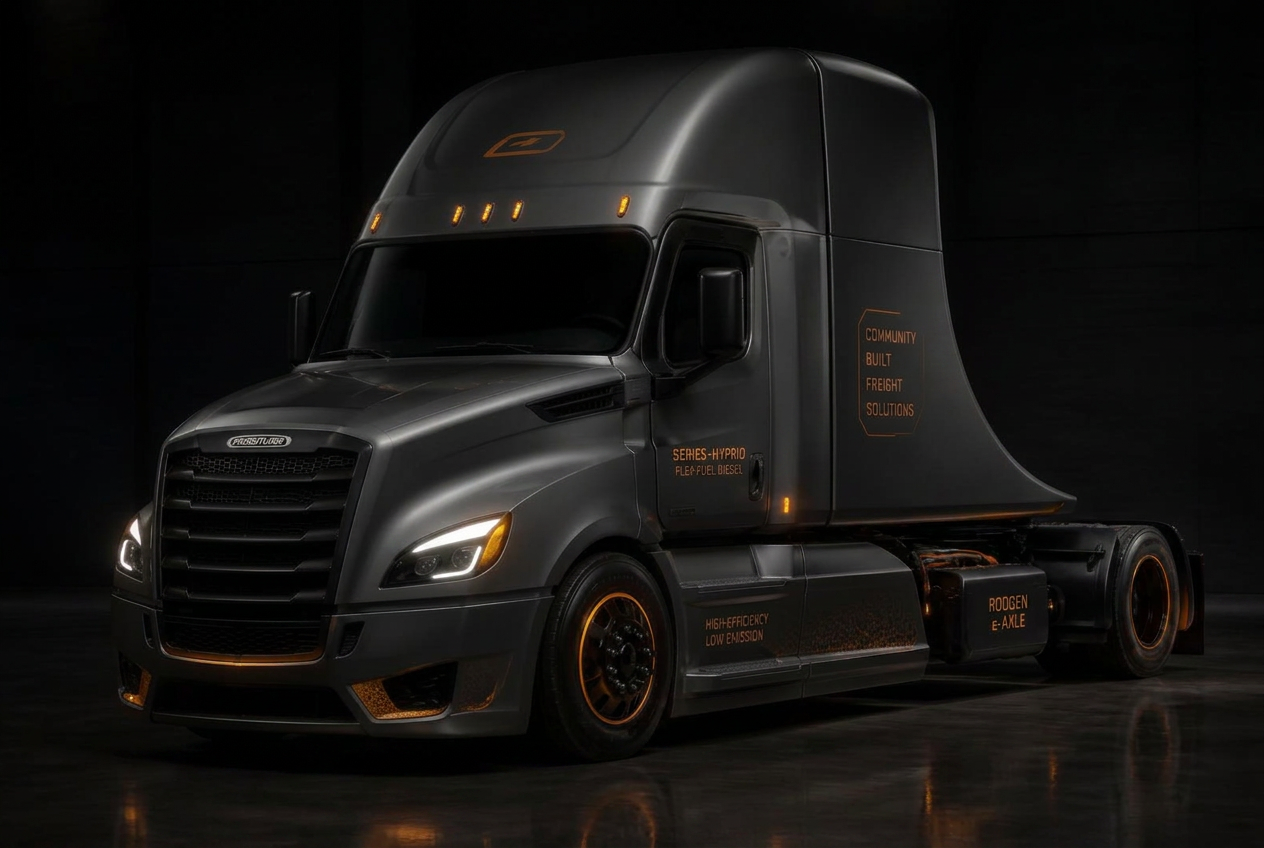
Platform specification
- Drive
- Brogen 2-speed e-axle, 350 kW peak
- Buffer
- 84 kWh LiFePO4, liquid-conditioned
- Range extender
- 2.0L flex-fuel genset, E85 / biogas
- Architecture
- Series hybrid — no mechanical path to the wheels
- Glider mass
- 4,180 kg with body-in-white aluminium
- Drag
- Cd 0.28 with boat-tail and skirt package
- Plug-in range
- 192 km battery-only, urban duty cycle
- Service
- Open manuals, standard tooling, local rebuild
Build sequence
Glider intake
Cab-and-frame gliders arrive without powertrain. We survey the rails, strip the harness, and log every component into the shared ledger.
E-axle fitment
The Brogen e-axle drops into a purpose-built subframe. High-voltage routing is done by certified apprentices under a licensed supervisor.
Buffer & genset
LiFePO4 modules are stacked into a crash-braced tunnel pack. The flex-fuel genset runs only as a charger, at a single efficient load point.
Commission & hand-off
Dyno verification, thermal soak, and a two-day operator course. The truck leaves with its own service manual and parts list.
Why series, why flex-fuel
A series layout lets the engine ignore the road entirely. It runs at one load point or not at all, which is where a small combustion unit is actually efficient.
Flex-fuel means the truck accepts what the district can produce — ethanol from regional stock, biogas from the digesters, petrol only as a fallback.
LiFePO4 carries the duty cycle without cobalt, tolerates deep cycling, and retires into the campus UPS bank when it drops below traction spec.
Build with us
Glider conversions are assembled in partner shops on the block. If you want a truck, a bench, or a fleet order, call or text directly.